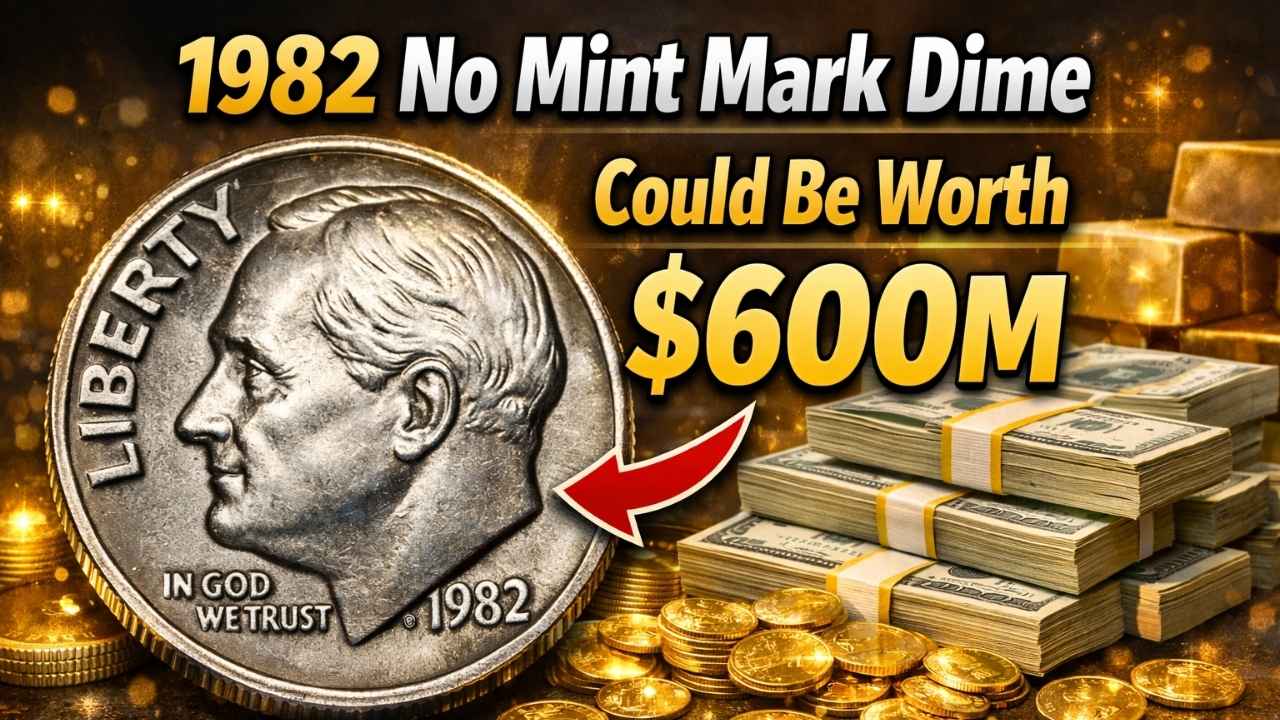
1982 No Mint Mark Dime Could Be Worth $600M: Coin collecting is a fascinating hobby, where the excitement of discovery and the thrill of finding something rare can turn an ordinary day into something extraordinary. Among the countless coins that collectors seek, the 1982 No Mint Mark Dime has recently made headlines due to its potential value—rumored to be as high as $600 million! This once overlooked coin, which many would have spent without a second thought, has now become a sought-after treasure. Here’s everything you need to know about the 1982 No Mint Mark Dime and why it could be worth a fortune.
History of the Dime
The dime, valued at ten cents, has been a part of American currency since the late 18th century. Its design has evolved over the years, with various renditions reflecting American history, culture, and artistry. The 1982 No Mint Mark Dime, however, stands out due to a unique mistake that occurred during production.

In 1982, the U.S. Mint began minting dimes in Philadelphia, but due to a rare error, a batch of dimes was struck without the expected mint mark—something that had been standard for coins produced at the Philadelphia Mint. This seemingly small omission would go unnoticed by most, but for collectors, it marks a significant error. Since most coins from that year bear the mint mark “D” for Denver or “S” for San Francisco, this “No Mint Mark” variety is incredibly rare.
The $600 Million 1982 No Mint Mark Dime
While most dimes from 1982 are worth just 10 cents, one specific 1982 No Mint Mark Dime has recently surfaced, valued at a staggering $600 million. This extraordinary figure has stunned the numismatic community and left collectors scrambling through their change in hopes of finding their own “No Mint Mark” dime.

The discovery of this high-value coin is a rare and remarkable event. Typically, coins with minting errors are worth more than their face value, but for a coin to be worth hundreds of millions of dollars, it must be exceedingly rare and in near-perfect condition. The 1982 No Mint Mark Dime’s unique characteristics, including its rarity and its historical significance, have made it one of the most valuable coins ever discovered.
Factors That Contribute to the $600 Million Value
Several factors contribute to the astonishing value of the 1982 No Mint Mark Dime. In coin collecting, rarity, condition, and historical significance are the primary drivers of value. Let’s take a look at these key elements that have made this particular dime worth such an astronomical sum:

| Factor | Description |
|---|---|
| Rarity | The 1982 No Mint Mark Dime is extremely rare, as very few were struck without the mint mark. |
| Minting Error | The absence of a mint mark during a period when it was expected adds a unique characteristic that makes the coin highly valuable. |
| Condition | Coins that are in mint or near-mint condition are worth far more than those that have been heavily circulated or damaged. |
| Historical Significance | The coin represents a rare mistake during an important time in U.S. currency history, increasing its value among collectors. |
| Market Demand | The high demand for rare and error coins, especially from key years like 1982, has driven up the price. |
This dime’s value is not just about the error itself—it also has cultural and historical significance. As the coin ages, its value continues to increase, especially if it is well-preserved.
Why Minting Errors Are So Important
Minting errors are one of the most exciting aspects of coin collecting. When a coin is struck with a flaw, such as a misaligned die, double strike, or the absence of a mint mark, it becomes a one-of-a-kind piece that collectors are eager to acquire. These types of errors are extremely rare and increase the value of the coin dramatically.

The 1982 No Mint Mark Dime is an example of how a seemingly small mistake during production can lead to an incredibly valuable piece of currency. Other well-known errors include coins that were struck with the wrong metal or coins that have been struck multiple times, leading to double images. Error coins often become highly sought after because they are rare and unique, making them valuable in the eyes of collectors.
How to Spot a Valuable 1982 No Mint Mark Dime
For those interested in finding a 1982 No Mint Mark Dime, it’s important to know what to look for. These are some key tips to help identify this rare coin:

- Examine the Mint Mark: The first step is to check whether the dime has a mint mark. Most dimes from 1982 will have a “D” or “S” mint mark, indicating the Denver or San Francisco Mint. A 1982 dime without any mint mark is the one you’re looking for.
- Check the Condition: Look for signs of wear or damage. Coins that are in mint or near-mint condition will be worth far more than those that are heavily circulated.
- Use Magnification: A magnifying glass or jeweler’s loupe can help you spot the details more easily and confirm that the coin lacks a mint mark.
- Compare with Known Examples: Research online or in coin guides to compare the 1982 No Mint Mark Dime with authenticated examples. This will help you identify key features and avoid confusion with other coins.
If you believe you’ve found a 1982 No Mint Mark Dime, it’s wise to get it professionally graded and authenticated by services like PCGS or NGC. Proper grading ensures that the coin’s condition and rarity are evaluated accurately.
Tips for Collecting Error Coins
If you’re looking to collect error coins like the 1982 No Mint Mark Dime, here are a few tips to help you build your collection:
- Handle with Care: Always handle your coins carefully, ideally with gloves, to avoid leaving fingerprints or causing scratches that could reduce their value.
- Store in Protective Cases: Protect your coins by storing them in high-quality holders or capsules to prevent wear and tear.
- Learn About Different Errors: Understand the various types of minting errors and what makes them valuable. Familiarize yourself with the key errors for popular coin series like the Lincoln Cent, Mercury Dime, and others.
- Keep Updated on Market Trends: Coin values fluctuate over time. Stay informed by following numismatic news, auction results, and collector trends to make wise decisions.
- Join the Coin-Collecting Community: Networking with other collectors can provide valuable insights and opportunities to buy or sell rare coins.
By following these tips, you can increase your chances of finding valuable error coins, whether it’s the 1982 No Mint Mark Dime or another rare piece.
Investment Potential of Error Coins
Error coins like the 1982 No Mint Mark Dime are not just fascinating collectibles—they also have significant investment potential. As the value of rare coins continues to rise, collectors often see these error coins as an opportunity to diversify their investments. Given the extreme rarity of the 1982 No Mint Mark Dime, its value could continue to appreciate, making it a potentially profitable asset for those who are willing to invest in rare coins.

However, it’s important to do thorough research and consult with experts before making any significant coin investments. Coin markets can be volatile, and understanding which coins are likely to increase in value is key to making sound investment choices.
Final Thoughts
The 1982 No Mint Mark Dime is a perfect example of how something as simple as a minting error can lead to a massive discovery. From a regular dime to a $600 million treasure, this coin has captured the imagination of collectors worldwide. Whether you’re an experienced numismatist or just someone checking their change, knowing how to spot a rare coin could open the door to an extraordinary find.

As with all collectibles, coin collecting is about more than just financial gain—it’s about the connection to history and the thrill of uncovering a hidden gem. If you’re fortunate enough to find an error coin like the 1982 No Mint Mark Dime, you might just be holding the key to a fortune.