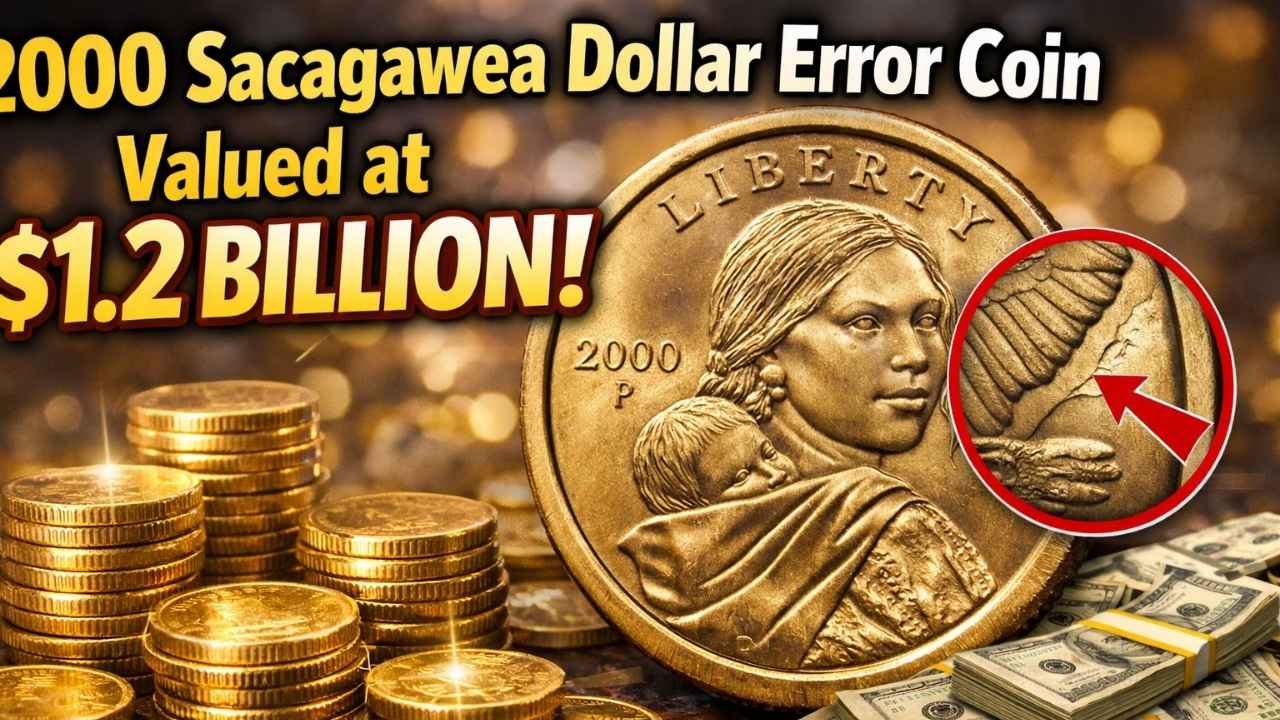
2000 Sacagawea Dollar Error Coin Valued at $1.2 Billion: Coin collecting has always been an intriguing hobby, filled with the excitement of discovering rare and valuable treasures. Among the many coins that have captured the attention of collectors, the 2000 Sacagawea Dollar stands out. Initially introduced as part of the Native American $1 Coin Program, this golden-colored dollar coin has been appreciated for its historical significance and striking design. However, a recent discovery has left numismatists stunned—an error coin from 2000 that could be worth a staggering $1.2 billion. Let’s take a closer look at this remarkable find and explore how a simple coin could reach such an astronomical value.
History of the Sacagawea Dollar
The Sacagawea Dollar was introduced in 2000 to replace the Susan B. Anthony Dollar, which had failed to gain popularity due to its similarity in size to the quarter. Designed by artist Glenna Goodacre, the coin features Sacagawea, the Shoshone woman who guided the Lewis and Clark expedition, carrying her infant son, Jean Baptiste, on the obverse. The reverse initially depicted a soaring eagle, symbolizing freedom and peace.
Over time, the Sacagawea Dollar’s reverse design changed to reflect the Native American $1 Coin Program’s broader goal of celebrating Native American culture and heritage. Though the Sacagawea Dollar was produced in large quantities, certain editions, particularly error coins, have become rare and highly sought after. One such error coin, believed to have been struck in 2000, is now rumored to be worth up to $1.2 billion.
The $1.2 Billion Sacagawea Dollar Error Coin
The 2000 Sacagawea Dollar error coin that has collectors buzzing is not just any coin—it’s a once-in-a-lifetime discovery. This particular coin, believed to have been minted with an extreme error during production, could be worth as much as $1.2 billion. This coin was initially thought to be a regular Sacagawea Dollar, but upon closer inspection, it was discovered to have been struck with a combination of minting flaws that set it apart from the hundreds of millions of coins produced that year.

Numismatists are astounded by the value of this error coin. Typically, errors in coins can make them more valuable, but for a coin to reach such an extraordinary figure, it must be one of the rarest of its kind. The unique combination of factors, including the error itself, the coin’s historical significance, and its near-perfect condition, has led to the belief that it could be worth up to $1.2 billion in the right market.
Factors That Make the 2000 Sacagawea Dollar Error Coin So Valuable
Several factors contribute to the enormous potential value of the 2000 Sacagawea Dollar error coin. In the world of numismatics, rarity, historical significance, and the nature of the error all play crucial roles in determining a coin’s worth. Here are the key factors that make this particular coin so valuable:

| Factor | Description |
|---|---|
| Rarity | Error coins are naturally rarer than regular issues, especially when combined with multiple errors or production flaws. |
| Minting Errors | The unique errors made during production, such as misalignment, double striking, or wrong die pairing, make the coin incredibly valuable. |
| Condition | Coins that are in near-perfect or mint condition are significantly more valuable than those that have been circulated or damaged. |
| Historical Significance | The Sacagawea Dollar represents an important moment in U.S. history, commemorating Native American heritage and the Lewis and Clark expedition. |
| Market Demand | High demand for rare error coins, especially those with significant historical context, can drive prices to astronomical levels. |
This error coin stands out not only for its rarity but also for the specific types of minting errors it contains. If verified, such a coin could surpass any previous records for coin values and place it among the most valuable coins ever discovered.
Types of Errors That Increase a Coin’s Value
In the world of coin collecting, errors are often seen as valuable because they occur when the minting process goes wrong. These errors can take several forms, and each one impacts the value of the coin differently. Some common types of errors that make a coin more valuable include:
- Double Striking: When a coin is struck multiple times, it can lead to overlapping designs or features, creating a visually unique coin.
- Misaligned Dies: A misaligned die during the minting process can cause a coin to have off-center designs or other unusual features.
- Clipped Planchets: A planchet is the metal disc used to strike a coin. If the planchet is damaged or clipped before being struck, it can result in a coin with an irregular shape or missing sections.
- Die Cracks: Cracks in the minting die can transfer to the coin, resulting in coins with distinctive lines or designs that were not intended.
- Wrong Planchet: Occasionally, a coin is struck using the wrong type of metal planchet, leading to a rare and valuable variant of a standard issue.
In the case of the 2000 Sacagawea Dollar error coin, the specific nature of the minting flaw has not yet been fully disclosed, adding to the intrigue surrounding the coin’s potential value. The uniqueness of the errors involved is what has numismatists and collectors alike eagerly speculating on the possible value.
How to Spot an Error Coin
Spotting a rare error coin is a skill that requires patience and a keen eye. Here are some tips for collectors looking to find valuable error coins like the 2000 Sacagawea Dollar:
- Examine the Coin Closely: Look for unusual features such as double striking, off-center designs, or other flaws. A magnifying glass or jeweler’s loupe can help you spot these details.
- Check for Misalignment: Ensure that the coin’s design is aligned correctly. If it’s off-center or skewed, it could indicate a misaligned die error.
- Look for Clipped Edges: Examine the coin for any irregularities along the edges, which may suggest a clipped planchet error.
- Compare to Known Varieties: Familiarize yourself with known minting errors from that year or series of coins. Compare your coin with official examples to spot differences.
- Get It Professionally Graded: If you believe you have found an error coin, have it professionally graded by a service like PCGS or NGC. This will ensure the coin is authenticated and graded for its condition.
Error coins, especially those that are well-preserved, can be worth many times their face value. If you happen to find one like the 2000 Sacagawea Dollar error coin, you might be holding a piece of history that could be worth millions.
Tips for Collecting Error Coins
If you’re interested in collecting error coins, here are some tips to help you get started:
- Handle with Care: Always wear gloves when handling coins to avoid leaving fingerprints or causing scratches.
- Educate Yourself: Learn about the types of minting errors that occur and how to identify them. This will help you spot valuable coins.
- Store in Protective Cases: Proper storage is essential to preserving the condition of your coins. Use protective cases or capsules to prevent damage.
- Follow Market Trends: Stay up-to-date with the latest news on coin values and the most sought-after errors. This will help you make informed decisions when buying or selling.
- Network with Other Collectors: Join online forums, clubs, or attend numismatic events to connect with other collectors and learn from their experiences.
By following these guidelines, you can increase your chances of discovering valuable error coins and building a collection that could one day be worth a fortune.
The Investment Potential of Error Coins
Error coins are not only fascinating to collect, but they also have significant investment potential. As seen with the 2000 Sacagawea Dollar error coin, rare and unique coins can command astronomical prices in the right market. For collectors, error coins offer the opportunity to invest in a piece of history that may continue to appreciate in value over time.

However, as with any investment, it’s important to do thorough research and seek professional advice before making significant purchases. The market for rare coins can fluctuate, and knowing which coins are likely to increase in value is key to making informed investment decisions.
Final Thoughts
The 2000 Sacagawea Dollar error coin, potentially worth $1.2 billion, serves as a reminder of the incredible value that rare and unique coins can hold. From the fascinating history behind the Sacagawea Dollar to the stunning discovery of this rare error coin, it’s clear that coin collecting can lead to extraordinary finds. Whether you’re a seasoned collector or just starting out, learning how to spot valuable error coins can be a rewarding and potentially profitable endeavor.

For those fortunate enough to find an error coin like the 2000 Sacagawea Dollar, it’s not just about the financial gain—it’s about owning a piece of history, craftsmanship, and rarity that can’t be replicated. The world of coin collecting continues to captivate enthusiasts worldwide, and with the right knowledge and patience, you could be the next lucky collector to strike gold—or in this case, a $1.2 billion jackpot.